As we were assigned to read the “Ballot or the Bullet" for
lecture last week, I could not help but draw parallels between the situation of
that Malcolm X described to the revolution that engulfed Egypt two years ago. Malcolm
X ultimately supported the use of the bullet in stark opposition to MLK’s
nonviolent protests and Malcolm X’s beliefs continue to be supported in Egypt.
 |
| Hosni Mubarak |
Egypt was the second country, behind Tunisia,
to spark revolts during the historic Arab Spring. The protests and revolts were
in response to the dictatorial leadership of President Hosni Mubarak. They
began primarily as non-violent civil disobedience, following the examples of
historic leaders such as Dr. Martin Luther King Jr. and Mahatma Gandhi, but
soon escalated into violence, following the ultimate idea of using the bullet
when all else failed as expressed by Malcolm X.
Another similarity can be seen through
the blatant segregation in Egypt between the different faiths. Guardian, a
United Kingdom mass media company, published a timeline of the events of the
Arab spring; the first actual event of the revolution in Egypt began over the
bombing of a Church in Cairo. This bombing targeted the Christian minority of
10% in a predominantly Muslim practicing nation. Despite the fact that
President Mubarak called it an attack against all of Egypt, this was the spark
that escalated the brewing societal isolations between the two religions. Likewise,
in the 1960’s when Malcolm X was giving his speech, the percent of the
population of African Americans in America was 10.5%; minority suppression is
exactly what occurred in both situations.
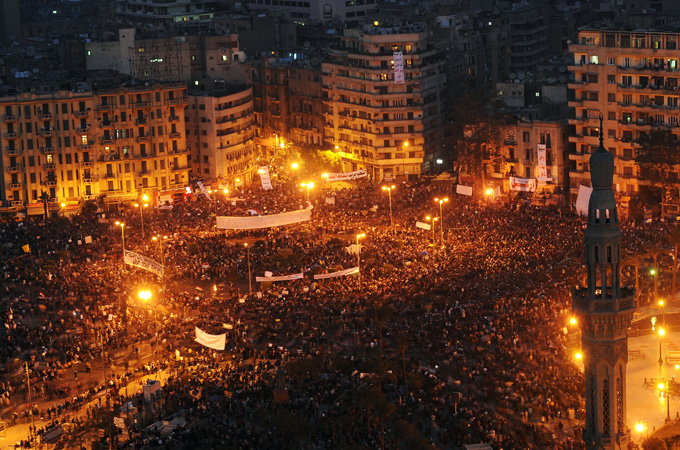 |
| Protests in Egypt |
Following the fall from power of
President Mubarak, Egypt experienced its first presidential election ever or
the so-called “ballot”. This ballot, however, elected the leader, Mohamed Morsi, of the Muslim Brotherhood, an Islamist group in Egypt. Just as many
previously enslaved African Americans were barred from voting despite the new
legislation, the election of Mohamed Morsi was also immersed in suspicion of an
unfair ballot. Though the opinions after the marginal election of Morsi was
ambiguous at first, recent news out of Egypt is beginning to show that Morsi
may not be much different than his predecessor, Mubarak. This past November
Morsi placed himself above any judicial review and just yesterday the New York Times reported that Morsi approved a martial law restatement. So as the
democratic institutions that Egypt has just laid the foundations for begins to
crumble, it is a question that many have raised; is Egypt heading towards
another revolution? Will the “bullet” once again be heard in response to the
failings of the government?
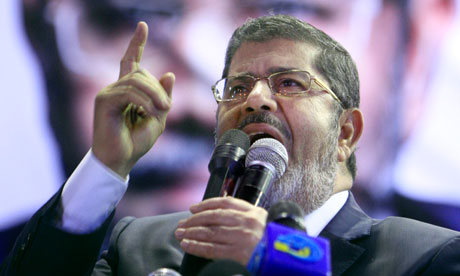 |
| Mohamed Morsi |
Karl Marx, another political
philosopher whose work we recently read in class, The Communist Manifesto, once
stated, “history repeats itself, first as tragedy, second as farce.” Marx was referencing the reign of Napoleon and
then the same mistakes of ruling that his nephew, Napoleon III, made 37 years
later, however this quote is universal in history; from the continued inequality
experienced by many Americans across the nation, to the continued struggles of
the Egyptians.

Malini,
ReplyDeleteCool topic to think about. It is especially prevalent with our own election this past month. As you stated, Marx was convinced that revolution happens in cycles. While Egypt may be able to regain some of the stability it needs, it doesn't look to optimistic. At first, I didn't think much of them electing a representative of the Muslim Brotherhood as President. After all, it is there choice. But as you point out, it may not have been there choice at all with all of the corruption in the election process. So in the end, who knows how Egypt will end up? Even more important, will a second revolution in Egypt have a similar effect as the first Arab spring, causing the countries around them to have second revolutions? And who knows if Syria will even be done with their first revolution by that time. Things to consider, great post.